Luck, Luck, Taking Chances, and Luck
by Mary Aviyah Farkas
I am the daughter of a Hungarian Holocaust survivor, Kalman Gutlohn (later Americanized to Clarence K. Grant) who lived through three and a half years of Hungarian Forced Labor and weeks of hiding, my mother risking her life to save his, before Budapest was liberated in January 1945.
My father was born in Budapest, August 1910 (deceased 1986), to parents who owned a small grocery store in the Jewish section of Pest. My father was the second of their three children. They had enough money to send my father to the newly established Jewish Gymnasium, and later the Academy of Commerce where he trained to be a banker. In the 1930’s he had a successful career in foreign exchange at the City Savings Bank in Budapest and served two tours of duty in the Hungarian Army.
My father met my American, Catholic mother, Anna Farkas through her employer, Paul Totis, a Jewish wool merchant. Anna was born in York-Run Pennsylvania, July 1912 (deceased 1983), and was brought to Hungary at nine years old when her parents repatriated to Hungary.
Anna left home at 16, eventually moved to Budapest and became an English tutor for wealthy Jewish families. She was the beloved governess and English tutor for the Totis’ young daughter Zsuzsi when she met and married my father in 1939, two years prior to Hungary’s law forbidding Christians and Jews to marry. Both my mother and Paul Totis were instrumental in saving my father’s life, as well as (in my father’s words): “Luck, Luck, Taking Chances, and Luck.”
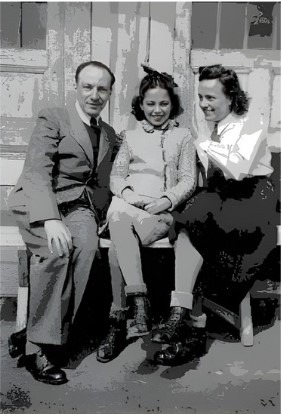
My father was dismissed from his banking job due to the anti-Jewish laws passed in 1939 which severely restricted the number of Jews in various professions. In early summer, 1941 he was conscripted into Forced Labor. His Labor Company, the 109/36, was tasked with installing telegraph poles in the high Carpathian Mountains, without adequate food, shelter or clothing to ward off the cruel mountainous weather. When he gave his Shoah Testimony, my father, choking with emotion, told of his Labor Company finding shelter in abandoned Jewish homes. The Jews of the area had been massacred in the summer of 1941 at Kamenets-Podolsk, one of the first large Einsatzgruppen murdering sites.
Paul Totis was also “drafted” into the 109/36 company. But as a major supplier of wool for the Army, he was able to use these connections along with well-placed bribes, to not actually have to serve, and he became the 109/36’s “Guardian Angel.” With the arrival of dire winter weather, he arranged to have the company called back to Budapest to labor in the Goldberger Textile Factory in Buda, saving the men from almost sure death from freezing.
Each six to eight weeks, the men in my father’s Company were given a brief three-hour leave from their grueling work. Being back in Budapest meant that my father was just a trolley ride away from my mother. She gave him plenty of good food, clean, warm clothing, and they even conceived my sister Victoria, named for Allied Victory, who was born January 1944.
When the Germans invaded Hungary in March 1944, Paul Totis believed that the 109/36 would be safer outside of Budapest, and had the men moved to Diosgyor, in Borshod County, an industrial area in northern Hungary. There they labored in the railroad foundry turning hot iron nuggets into rail ties; without proper gloves or shoes, they suffered major burns and always hunger. They found shelter in abandoned chicken coops.
My father knew that his paternal relatives in Borshod County were shipped from its railroad station to Auschwitz. Of my father’s paternal aunts, uncles, and cousins, 24 were martyred. On his maternal side, five cousins, one aunt and one uncle were martyred. My father’s brother Sandor (Alexander) also in Forced Labor, was martyred on the Russian front in 1942; his body was never found.
In later spring 1944, when the Allies began bombing Hungary’s industrial areas, my father’s work changed to disposing of dead bodies and large amounts of rubble. The Jewish men had no shelter during the bombing; they were not allowed into the town’s air raid shelters.
In October 1944, when Admiral Horthy lost control of Hungary’s government in the coup d’état to the Szalasi Arrow Cross gangs, the 109/36’s Christian commander, knowing that the Russians had almost captured Hungary, and afraid that the local Arrow Cross fascists would slaughter his men, told them to “just go home.” Traveling by night, off main roads, my father made it back to Budapest to the family apartment. He was there for just one night, and as my father wrote: “…the next morning before sunrise, an Arrow Cross patrol searched the building, looking for Jews. A fierce-looking soldier with a bayonet on his rifle arrested me.”
He was taken, along with hundreds of surviving Budapest Jews, to the Brick Factory in Buda. From there, they were marched to the Austrian border, and taken to either Auschwitz or Mauthausen. My mother began a long search for my father and witnessed the columns of suffering men, women, and children being marched to their death.
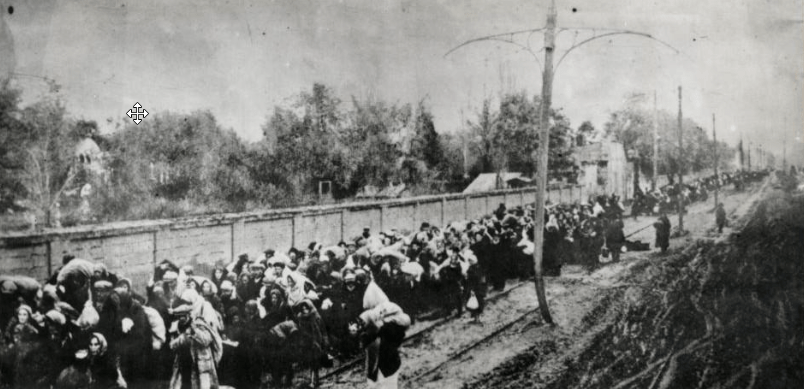
Miraculously, my father was able to escape from the Brick Factory by telling a middle-aged, benevolent-looking guard that he had strayed from his Labor Company. The guard saw through his ruse, took pity, and marched him out of the “Gates of Hell.”
My father was then able to obtain a Carl Lutz Schutz-Brief [a “Safe Pass” providing Swiss government protection], and enter a “Safe House” which had been the Institute for Deaf Mutes. In early December, a rumor told of Arrow Cross invading the Safe House. No one believed this would happen. My father believed the rumor, and created a hiding place in the Institute’s library. He was able to hide while the other men were taken to the Danube and shot to death. In the early morning he escaped through the coal chute and ran to my mother’s apartment where she hid him until the Russians liberated Pest on January 18, 1945.
When the Siege of Budapest began, my father couldn’t go into the apartment building’s basement shelter, because he was Jewish. He nearly froze to death upstairs in the unheated apartment with all the windows shattered. Almost daily, my mother concocted one reason or another to leave the basement to bring him food and water, all while caring for my infant sister. As bombs rained down on the city, my father would say the 91st Psalm to help calm his terror of a direct hit.
Several weeks after Budapest was liberated, my father found work with the Jewish Joint Distribution Committee in Bucharest. My mother followed him there and that summer-fall of 1945 they conceived my second sister, Alexandra, named after my murdered uncle. As an American, my mother was able to come back to the U.S. in January 1946; my father could not enter the U.S. until August 1947.
I was born in the summer of 1948 in Manhattan. I grew up in a solidly Hungarian home, with Magyar as my first language. Classical music played constantly, we had family meals together, nothing was ever wasted, reading and books were almost revered. We were always properly dressed, especially when visiting other Hungarian Holocaust survivors. Both of my parents were very loving and affectionate, yet they had both witnessed inhuman behavior and both experienced unspeakable wounding and trauma. Thus there was an ever-present tension in our home.
As a young child, I had vivid nightmares, screaming myself awake in terror. I felt constant fear; I never felt safe. My nightly screams mixed with my mother’s long and loud sobbing and wailing. Because she cried, almost nightly, I could never seek or receive comfort for my own terror.
Her wailing, and my nightmares became part and parcel of my childhood home, just as the too frequent fights between my parents which sometimes turned violent. I witnessed my mother straddling my father on the ground pummeling his face bloody. I witnessed my father become hysterically violent when he threw a glass jar of Bosco (our favorite chocolate syrup for milk) out of our sixth-floor kitchen window. Such explosions of anger, from both my parents were common, and as a child my overriding emotion was fear.
I was baptized Catholic, my father not wanting his children raised as Jews. As an adult I converted to Judaism and took the Hebrew name Aviyah: God is my Father. I never met any of my four grandparents (my paternal grandfather, Zsigmond “cheated Hitler” as my father would say, dying in 1937), nor my surviving paternal aunt.
Part and parcel of the Holocaust was the wretched, unspeakable damage done to its millions of victims, as well as their descendants. My life began with tremendous tension and fear at home, yet I’ve worked hard to daily, experience joy. Just as my father, I’ve had Luck, Luck, I took Chances, and had more Luck.
I am committed to sharing my father’s story as an antidote to those who continue to seek the destruction of human beings through war.
Copyright © 2026 Mary Aviyah Farkas. All Rights Reserved