
Liberation After Liberation
by Deborah Zisovic Beckman
IN MEMORY OF MY PARENTS MAX AND HELEN ZISOVIC, HOLOCAUST SURVIVORS
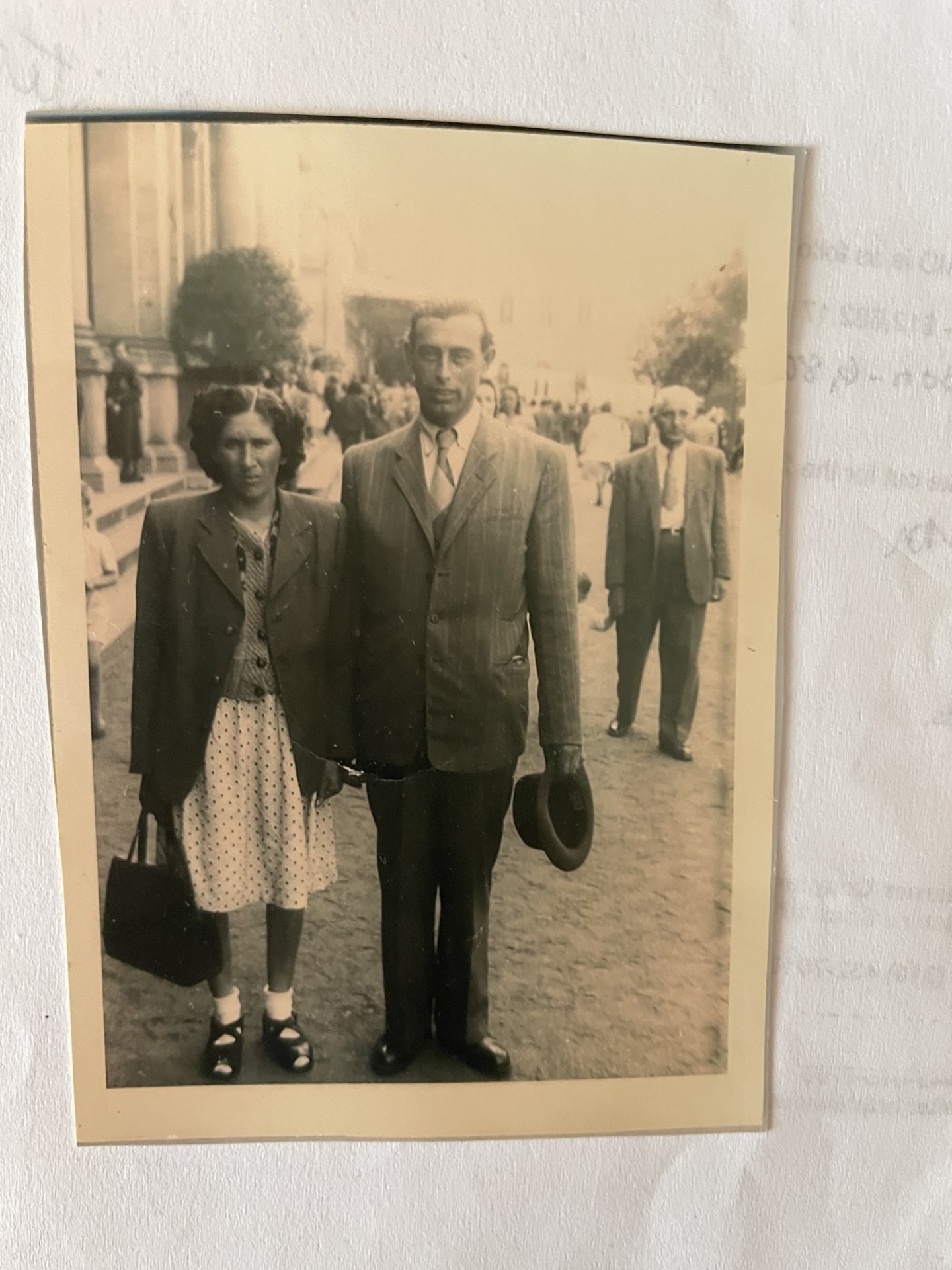
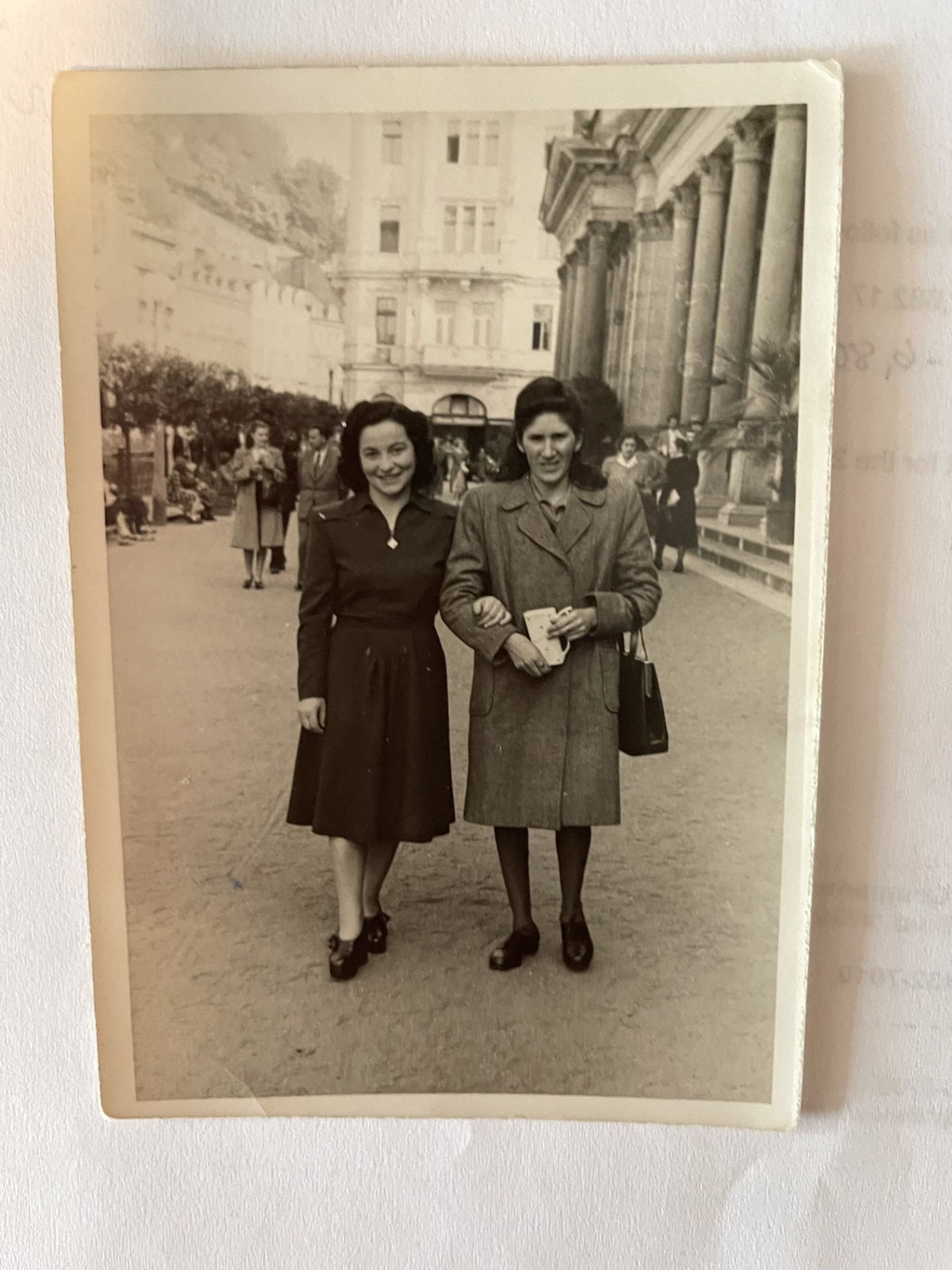
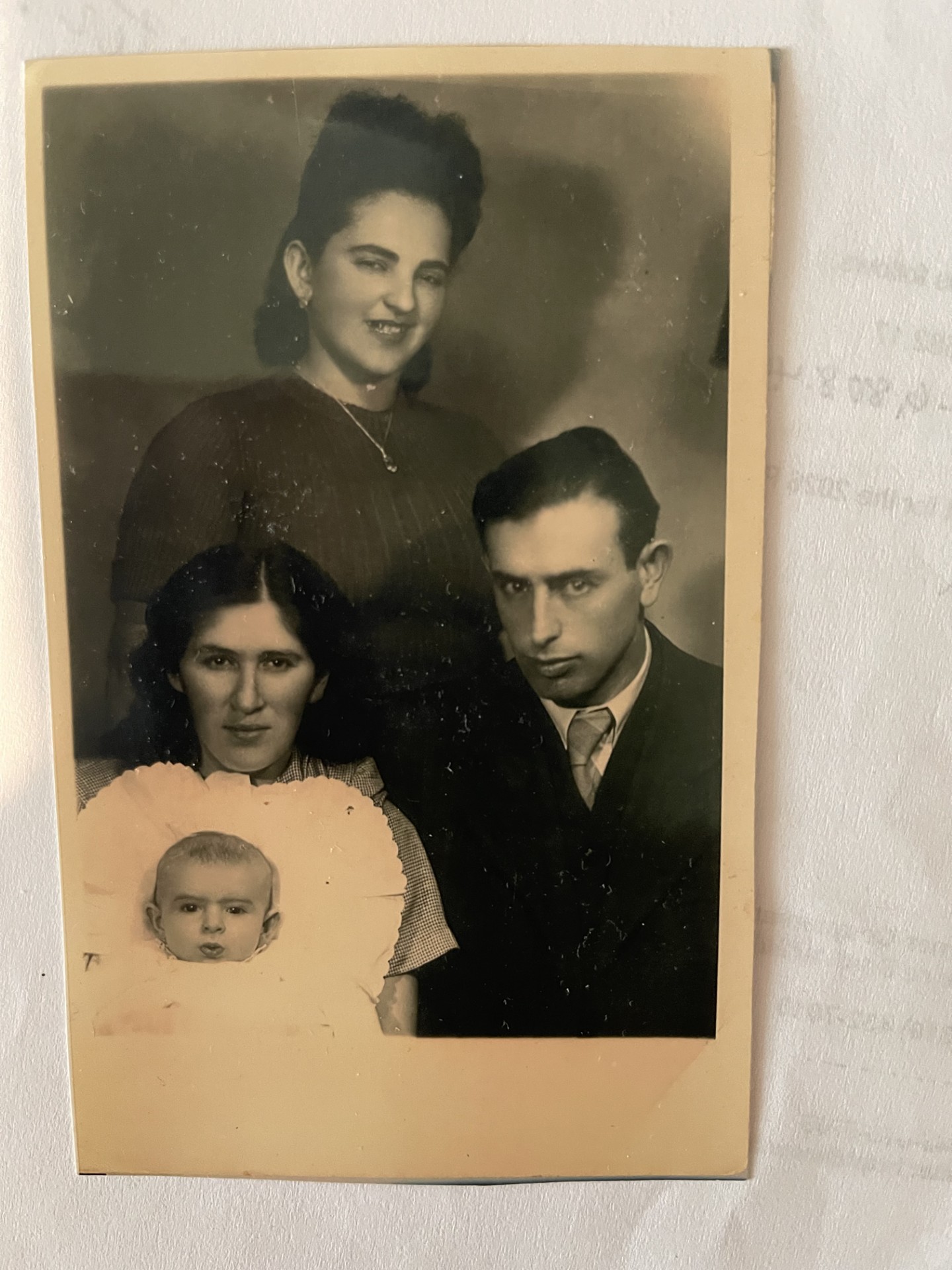
My life is deeply intertwined with the history of the Holocaust. I am the daughter of immigrants and the middle child of two Holocaust survivors, Max and Helen Zisovic. They were from neighboring rural farm villages in Czechoslovakia. After surviving the Holocaust, they met and married in November 1945, and their marriage lasted for 58 years.
Prior to the Holocaust, Mom described life on the farm as challenging yet fulfilling. She was the youngest of ten children in a blended family. Despite financial constraints, they cultivated most of their necessities, including wheat, vegetables, and fruit trees. They also engaged in dairy farming, producing milk, churning butter, making cheese, baking bread, and preserving food in a cool cellar due to the absence of refrigeration.
I was born on December 12, 1948, a few weeks after my parents arrived in America with my two-year-old sister Miriam, who was born in Czechoslovakia. When I was a few months old, we traveled by train to Los Angeles where my brother David was born. The three of us were raised similarly; however, we each developed different perspectives regarding our parents’ experiences.
In 1944, Mom with her parents and other family members were rounded up and initially deported to the Munkacs ghetto for approximately five weeks. They were then deported by train to the
Auschwitz Concentration Camp in Poland. Upon arrival to Auschwitz Mom’s parents and family members were immediately murdered. Mom as a young adult was by herself for the first time in her life. It was a painful and challenging time for her. Can you imagine how emotionally upset she was crying and depressed? In addition to Auschwitz Mom was deported by train to the following camps: Stutthof in Poland, Ravensbruck in Germany, Leitmeritz outside Poland and Germany. The last camp Mom was deported to was Theresienstadt in Czechoslovakia. Unlike the previous camps Mom was not transported by train to Theresienstadt. She endured and survived a death march to this camp. During the death march, Mom had no shoes, only rags tied to her feet. Consequently, she suffered from nerve damage caused by frostbite, which resulted in chronic foot pain for the remainder of her life. The prospect of possibly losing her feet deeply distressed her, and upon learning this, I was equally horrified. On May, 8, 1945 Mom was liberated from Theresienstadt by
Russian soldiers, the same day the Allies designated as Victory In Europe Day (V-E Day), the day Germany surrendered. Upon Liberation, survivors asked the Russian soldiers for food. The Russian soldiers said they were hungry as well and all they had was “wodka” (vodka). Mom survived the previously mentioned concentration camps and returned to her home, believing that if anyone else survived, they would also return. Eventually, Mom’s brother and a cousin returned.
Before the Holocaust, Dad apprenticed as a shoemaker, repairing and making shoes, with a specialty in orthopedic shoes. Dad also served in the Czechoslovakian army. Dad attended a Yeshiva, a school for Jewish studies, where he learned to read from the Torah, which is difficult since there are no vowels. As a side note, our local temple in Los Angeles would often ask Dad to read from the Torah, which is an honor. During the Holocaust Dad was in several forced labor battalions and was ordered to report to several locations for work, and the work was physical and hard. I am grateful Dad was young and strong which contributed to his survival. Dad looked forward to returning home to be with his father, wife and three children. Thinking about reuniting with them helped Dad survive. After Dad was liberated on October 24, 1944, he went back home and learned that his entire family had been murdered in Auschwitz. It must have been very hard and painful for him to learn this. Similar to Mom, Dad was alone after the war.
Even though concentration camps were liberated in 1945, it does not mean all survivors were totally liberated. Physically many survivors could not survive after Liberation because they could not sustain life due to starvation, illnesses and injuries. Many survivors got extremely sick and in some instances died from “refeeding syndrome,” which is a condition that occurs when people who have been starved are reintroduced to food too quickly. All the survivors were undernourished, weak and underweight. Many had food issues, physical ailments and psychological issues for the rest of their lives, and some died from them.
How did they endure the trauma, physical abuse, injuries, starvation, illnesses, exhausting labor, constant fear of death, and daily dehumanization? How did they manage to survive both physically and psychologically after Liberation?
They were liberated physically, but not psychologically or spiritually. Many had lost all or most of their family members, including parents, siblings, spouses, and children. Some had experienced a loss of faith. Most did not have homes to return to. They needed to regain strength and health, decide what to do next, determine where to go, locate any surviving family members, and start new lives. They were not completely liberated.
As previously mentioned, some survivors lost their faith. However, my parents maintained their beliefs despite their experiences. Their faith provided them with the strength to endure and persevere. My parents’ families adhered to religious Orthodoxy and my parents continued to live as modern Orthodox Jews. They upheld Kosher dietary laws and observed the Jewish religion, holidays, and traditions. They attended synagogue regularly, with Dad attending twice daily, morning and evening, and on Jewish holidays. Mom accompanied him on Saturdays (the Jewish Sabbath) and during holidays. They refrained from work on Saturdays in observance of the Sabbath. Their faith was a source of resilience and gave their lives purpose. Additionally, they ensured we attended Hebrew school after regular school hours. Although I wished to join organizations like the Brownies and Girl Scouts with my friends, this was not possible due to my Hebrew school schedule, which occasionally led to feelings of envy.
How to start new lives? Some survivors who returned to their homes in Europe encountered antisemitism from their neighbors and subsequently decided to emigrate. Others located family members in different countries and successfully joined them. Some began new lives independently, without the love and support of their lost families. Additionally, some chose to go to Palestine and participated in the 1948 war to establish the State of Israel. These survivors had no financial resources or possessions, having lost everything.
Mom experienced physical and psychological issues throughout her life. She suffered from nightmares, which gradually diminished over time, but she remained fearful. She often spoke about her experiences as a form of catharsis and would show her tattoo, A-7922, to signify her survival. Dad, on the other hand, maintained silence regarding his experiences. I learned more about their histories through their interviews with the Shoah Foundation. Both of my parents suffered from Post Traumatic Stress Disorder (PTSD) for the remainder of their lives. PTSD is a mental health condition that arises from extremely stressful or terrifying events. As a result, they were both highly protective. Mom’s PTSD was more noticeable because she expressed it verbally. Despite being physically free, they were clearly not free psychologically.
Intergenerational Trauma refers to the transmission of the psychological effects of trauma from one generation to the next. Research suggests that these effects can persist for up to four or five generations. Consequently, the traumatic experiences and resulting issues faced by survivors can be passed down to their children (second generation), grandchildren (third generation), and beyond. I have mourned the horrifying experiences and family losses endured by my parents. Additionally, I have grieved for myself growing up without my grandparents, an experience that left me envious of friends who enjoyed relationships with theirs. Currently, I am exploring how my parents’ traumas have influenced my own life. Thus, Liberation from such trauma is an ongoing process, continuing across generations.
Liberation after Liberation marks the beginning of the survivors’ journeys towards rebuilding their lives. Demonstrating remarkable fortitude, resolve, and resilience, they gradually became stronger both physically and psychologically. They established new homes, formed new families, pursued further education, and embarked on new careers. Through diligent effort, they created stable and fulfilling lives for themselves and their loved ones. However, many endured PTSD and nightmares throughout their lives as a lasting impact of their experiences.
Some survivors chose not to or were unable to share their experiences with their families. For some, the memories were too painful and evoked fearsome recollections, making it difficult for them to speak. Others opted to wait until their children were older before discussing their experiences to avoid causing distress at a young age. Over time, many survivors chose to share their stories with students and various groups to educate others about their experiences and ensure that the Holocaust is never forgotten. Their bravery in speaking out is commendable. Even after starting new lives, survivors often spent many years seeking stability, peace, the ability to love again, a sense of freedom, reduced fear, and physical and/or psychological healing.
Liberation after Liberation exemplifies the fortitude, resolve, and resilience of the survivors in rebuilding their lives, homes, and families. Their determination to share their stories to educate others about their experiences is commendable. Their bravery in doing so is deeply appreciated. The journey of Liberation after Liberation continues.
Copyright © 2026 Deborah Zisovic Beckman. All Rights Reserved.