
My Brother Peter
by Priscilla Schneider
Through the modern miracle of social media, I have reconnected to many people I have known throughout my life, acquaintances I remember fondly, and acquaintances I barely remember at all. One of the latter was a friend of my brother’s named Tim. He and my brother were roommates in the military. When Tim found me on Facebook, I just vaguely remembered his name, as it had been nearly fifty years since he had been in my life, but I couldn’t remember his person at all. I didn’t recognize his face because fifty years later he was an old man, not the young man I had known, who I really didn’t remember anyway. Tim remembered me as a teenager and I was embarrassed that I could not say the same. I asked my brother about him. He said yes, that he had come down to our home several times and they had been good friends then, but lost touch and it was nice to reconnect. So I accepted his friend request, and he has slipped in and out of my social media over the last few years.
About a month ago he slipped in again when I commented on a post on Facebook. It was about WWII, asking if anyone had any stories about their fathers or grandfathers coming home from the War. I don’t know why, but I commented about when my brother returned from Korea during the Viet Nam era, and how that memory still brought me to tears. The next thing I knew, Tim replied to my comment.
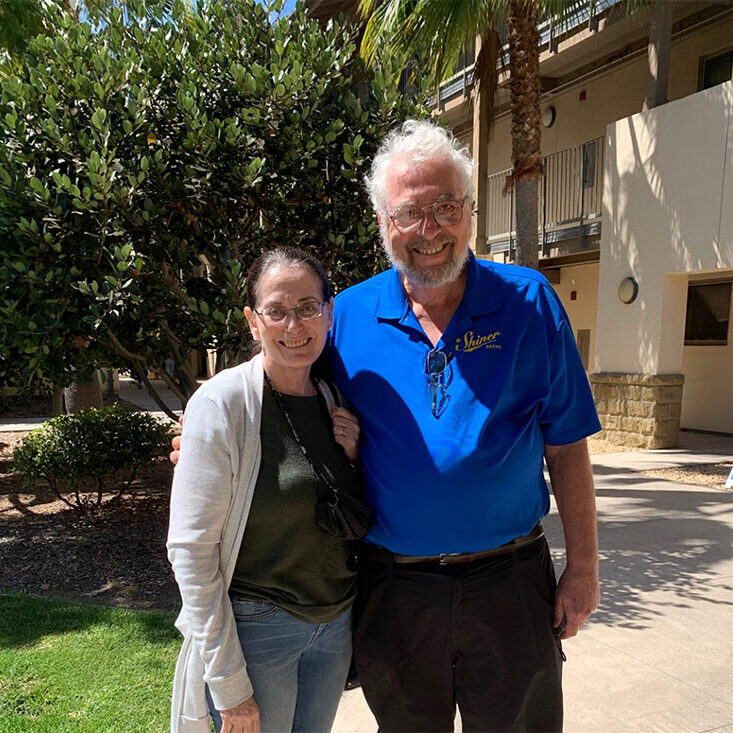
He wrote that Peter told him that when he was drafted, he had wanted to flee to Canada instead of serving, as everyone was being sent over to Viet Nam and coming back in body bags or injured, but if he had, my mother, father and I would have been deported, so he stayed and went into the military as drafted.
I was stunned. I had never heard anything about this and to have an almost stranger telling me really personal family history, that he knew and I did not, on an open forum on Facebook, left me dumbfounded. So I responded that I would have to talk to my brother as this was the first I was hearing this news. I texted my brother, and to my amazement, a whole era of family history, that I had lived through, but had been kept in the dark about, started to come into focus.
Through the modern miracle of social media, I have reconnected to many people I have known throughout my life, acquaintances I remember fondly, and acquaintances I barely remember at all. One of the latter was a friend of my brother’s named Tim. He and my brother were roommates in the military. When Tim found me on Facebook, I just vaguely remembered his name, as it had been nearly fifty years since he had been in my life, but I couldn’t remember his person at all. I didn’t recognize his face because fifty years later he was an old man, not the young man I had known, who I really didn’t remember anyway. Tim remembered me as a teenager and I was embarrassed that I could not say the same. I asked my brother about him. He said yes, that he had come down to our home several times and they had been good friends then, but lost touch and it was nice to reconnect. So I accepted his friend request, and he has slipped in and out of my social media over the last few years.
About a month ago he slipped in again when I commented on a post on Facebook. It was about WWII, asking if anyone had any stories about their fathers or grandfathers coming home from the War. I don’t know why, but I commented about when my brother returned from Korea during the Viet Nam era, and how that memory still brought me to tears. The next thing I knew, Tim replied to my comment. He wrote that Peter told him that when he was drafted, he had wanted to flee to Canada instead of serving, as everyone was being sent over to Viet Nam and coming back in body bags or injured, but if he had, my mother, father and I would have been deported, so he stayed and went into the military as drafted.
I was stunned. I had never heard anything about this and to have an almost stranger telling me really personal family history, that he knew and I did not, on an open forum on Facebook, left me dumbfounded. So I responded that I would have to talk to my brother as this was the first I was hearing this news. I texted my brother, and to my amazement, a whole era of family history, that I had lived through, but had been kept in the dark about, started to come into focus.
When we immigrated to America from Hungary in 1957, we came in as refugees, so we did not have green cards, but white cards. That was the reason why we had to go to the federal building every year, carrying our lung x-rays proving we did not have tuberculosis. The white cards were only good for one year, and every year when we presented ourselves, my parents were terrified that we would be deported. The white card did not give us the kind of protection that a green card would, because we were not considered permanent residents of the United States. The white card allowed us to work, go to school, pay taxes, and move around freely within the United States, but if we left the country, there was no guarantee we could reenter, which I realized must have been the reason my parents were adamant that we never go to Tijuana or beyond the American borders.
Unknown to them, I had gone to Tijuana with a boyfriend, with just my California driver’s license, along with a bunch of my friends, reentering without any issue because I don’t have an accent and seem as American as apple pie, just like my friends. I did not take my parents seriously and always considered them over protective and out of step. While both were true, I see now there were real threats to our status that I did not know about, and so I behaved as recklessly as any other American kid, except I wasn’t.
Peter told me that everyone had to register for the draft, no matter their immigration status. He had a girlfriend, who I remember, and when that relationship went south, he spiraled into a depression, stopped studying and failed a course, which voided his deferment and he was immediately drafted.
Several of his friends had fled to Canada and he wanted to follow them. We had only lived in the United States for a little over ten years with the status of legal aliens. Not only was his allegiance negligible, he also felt the Viet Nam War was futile and did not want to sacrifice his life for what he considered politicians’ ambitions and stupidity. And then there were his own experiences. Unlike me, who has no memory of 1956 because I was a baby, he remembered what happened during that war in Hungary, when he was a nine-year-old child, our harrowing escape, and had no wish to repeat facing death for the second time in his life.
He discussed it with my parents. My father told him that if he fled, there was the very real possibility that the next time we had to present ourselves to renew our white refugee cards, we would be denied and sent back to Hungary. This was not long after the failed Prague Spring of 1968 in Czechoslovakia, with Russia cracking down on the satellite countries, again. Should we be deported then, both my parents would at least be imprisoned, if not outright executed. As for me, although I was a fluent Hungarian speaker, I did not read or write well in Hungarian and culturally I was an American. I knew nothing of what it was like to live in Europe, much less Hungary, which in 1969/1970, was still a deeply repressive communist country where people had to stand in lines for food, there were no malls, no supermarkets, no television, no phones, teen-agers did not drive much less have their own cars, and if my parents were imprisoned, who knew what would happen to me. My father left it up to him, but realizing what was at stake, instead of running for his life, my brother literally placed his life in jeopardy to save us.
This must have been very difficult for my parents. If he fled, perhaps we would not be deported. If he went into the military, their only son was possibly sacrificing his life for them and for me. I was completely oblivious to the drama. Although I remember when he left that my mother cried, my father looked very worried, and I was afraid because of Viet Nam, I had no idea so much was riding on my brother’s shoulders.
He went through basic training and his entire unit was sent to Viet Nam. However, he told me that we were investigated by the FBI twice and neither he, nor our cousin Joseph, were cleared, so neither was sent to Viet Nam. My cousin, who was an American citizen, served in Okinawa as an officer in the Marines. Because Peter had been a science major, the army decided to train him as a medic and sent him to Korea, which I find very odd. Both Korea and Viet Nam were wars fought against communism. My family was labeled unsafe because of our familial communist ties, so what difference did it make sending him to Korea over Viet Nam? He said Korea was not a hot war like Viet Nam, but every day there were skirmishes and injuries. He laughed over the show MASH, which took place in Korea in the 1950’s, saying it accurately portrayed the attitude of disrespect of the medical units in which he worked and served.
Meanwhile, back in the States I was in high school. An aunt, who was an important Hungarian politician and therefore a communist, came to visit and stayed with my father’s sister. While she was here, we were followed by two men in suits everywhere, even to Disneyland. As the smart aleck kid that I was, I joked to my mother that I should take them coffee. My mother went absolutely berserk. Needless to say, I did not take them coffee.
I was unaware of the two FBI investigations, but apparently my parents were not. My brother later told me that they wanted to make him an officer, but because he did not have a security clearance, they could not. At that time, we believed if you served in the military you were automatically made an American citizen. My brother went to the JAG (Judge Advocate General), who informed him his assumptions were wrong and so he did not become a citizen at that time. After his service, he realized that the reason he was never sent to Viet Nam was because he could not get a security clearance, and the reason he could not get a security clearance was because he was not a citizen and still on refugee status.
Later he also told me that the Korean War, which was completely eclipsed by Viet Nam and so off American radar and television news, was hot enough for him. He told me about an incident where he had to drive an ambulance across a river that separates North and South Korea, across a railroad bridge, in the middle of the night, across the demilitarized zone where you could not turn on your headlights, pick up a GI who was involved in an accident and had to be taken to the hospital. He had to drive the ambulance back across the railroad bridge without lights to the Army Hospital, but this was after curfew in South Korea, so there was always the fear that the South Korean soldiers that were patrolling the areas at the time would shoot them in a potential friendly fire incident. Luckily, he was able to get both of them back safely to the hospital, where he remained until curfew was lifted. He had no wish to repeat the heroics.
Then one day the doorbell rang, I answered it, and, surprise, there he was, home after one year. I don’t remember if he or my father cried, by my mother and I did. He was then assigned to Fort Ord in Monterey. He was not required to live in the barracks, so he rented an apartment with Tim, who had just come home from Viet Nam, and the two of them had quite a bachelor pad.
My cousin also came home from Okinawa. He had a girlfriend and they scandalously rented an apartment together, unmarried. My aunt and mother were horrified. I don’t know what my father thought of it, if anything.
After both young men had served their country, they were both honorably discharged and both went on with their lives. The person who did not was my mother. She spent the rest of her life terrified of being followed and investigated. I used to laugh and say, who would care what we were doing, who would want to know? And my mother’s response to me was always that I didn’t know, which lead to an eye roll on my part.
I was the first in my family to become an American citizen in 1974, followed not long after by my brother. Usually it’s a five year wait, but for my parents it was twenty-five years before they were finally allowed to become citizens because of the latent communist ties to our Hungarian relatives.
My mother died in 2008. I had always dismissed her fears as unfounded paranoia left over from the Holocaust. In hearing my brother tell this story, I suddenly realized that my mother had a factual basis for her fears that stemmed not from the Holocaust, but from very real events experienced in America. My cheeks redden with shame. I had dismissed her fears my whole life, her words now ringing in my ears, that I didn’t know, and apparently, I didn’t.
I asked my brother why they had never told me any of this. His response was why would they? After he came home, that was it and life went on. What was there to say? I told him I understood why, when I was a kid, they would keep information from me. However, as a 67-year-old woman there was no reason to keep such information from me, and actually no reason for at least 40 years now. Further, I didn’t appreciate learning such news from a long-forgotten acquaintance on Facebook.
I have mulled over all this stuff since the shock of learning it. As annoyed as I am with my brother for not sharing it with me, he is my hero. I cannot wrap my head around that he was willing to sacrifice his life in order to save my parents and me. Luckily it all turned out okay, but on the day he had to report for duty that was unknown, and he faced it. It doesn’t get much more heroic than that.
Copyright © 2026 Priscilla Schneider. All Rights Reserved.