
Roisa and Gittel
by Paul Schneider
Foreword
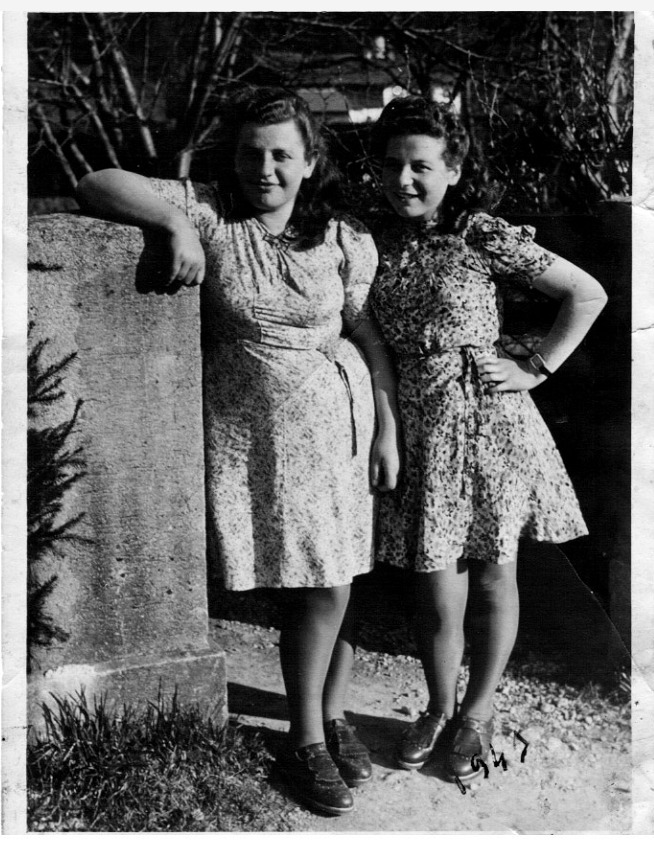
Born in the Subcarpathian Polish town Sanok to Hershel and Leah Filler in 1929 and 1932, sisters Roisa and Gittel lived together with their parents and older brother Yossel. The girls attended Polish school and Polish was their primary language. Their public-school studies were supplemented by a Rabbi who regularly visited the school to teach the Jewish children while the Catholic children met with a Priest. The family lived near to the town square, where their father operated a laundry and Roisa helped with the family business. While the girls had a religious upbringing, their parents’ personal philosophy of observance was relatively modern as opposed to the Hasidic majority of the Jews of the town. One of the town Rabbis was Meir Shapira who in 1923 founded the cyclical study of the Talmud known as Daf Yomi. Their father enjoyed interacting with all kinds of people and the laundry catered to a broad swath of Sanok’s population. They remember that Hershel was a respected man in the synagogue who always brought a yeshiva bocher home for Shabbos dinner with the family. They remember learning Chumash/Rashi with their father on Shabbos afternoons when very little. Their brother Yossel was known to attract all the girls and be a cutting figure on ice skates.
When the Nazis marched into Sanok on September 8, 1939, they quickly proceeded to burn down the town’s synagogues within the first few days. Of the roughly 5000 Jews living there, several hundred, including my mother’s family, were deported across the San River to Soviet territory.
The majority remaining were concentrated in a ghetto and subsequently shot in the forest, killed at Zaslaw concentration camp or Belzec death camp. Of the few hundred survivors of the Churbn Sunik – including Roisa and Gittel, almost all were from those sent into Soviet exile. Of those who returned, some were notably murdered by antisemitic Polish bands. Of what small hope they might have had of reclaiming their family home and laundry, the girls quickly fled and left Poland behind forever, totally accursed in their mind among the nations of the world. The majority remaining were concentrated in a ghetto and subsequently shot in the forest, killed at Zaslaw concentration camp or Belzec death camp. Of the few hundred survivors of the Churbn Sunik – including Roisa and Gittel, almost all were from those sent into Soviet exile. Of those who returned, some were notably murdered by antisemitic Polish bands. Of what small hope they might have had of reclaiming their family home and laundry, the girls quickly fled and left Poland behind forever, totally accursed in their mind among the nations of the world.
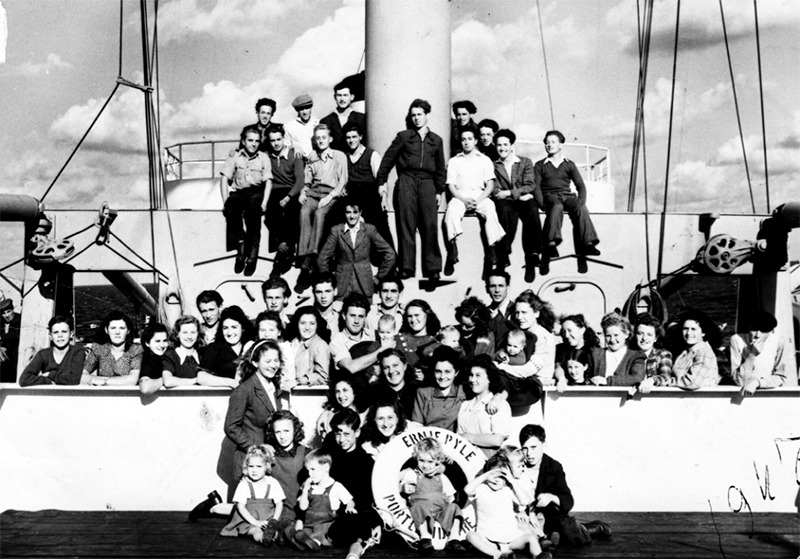
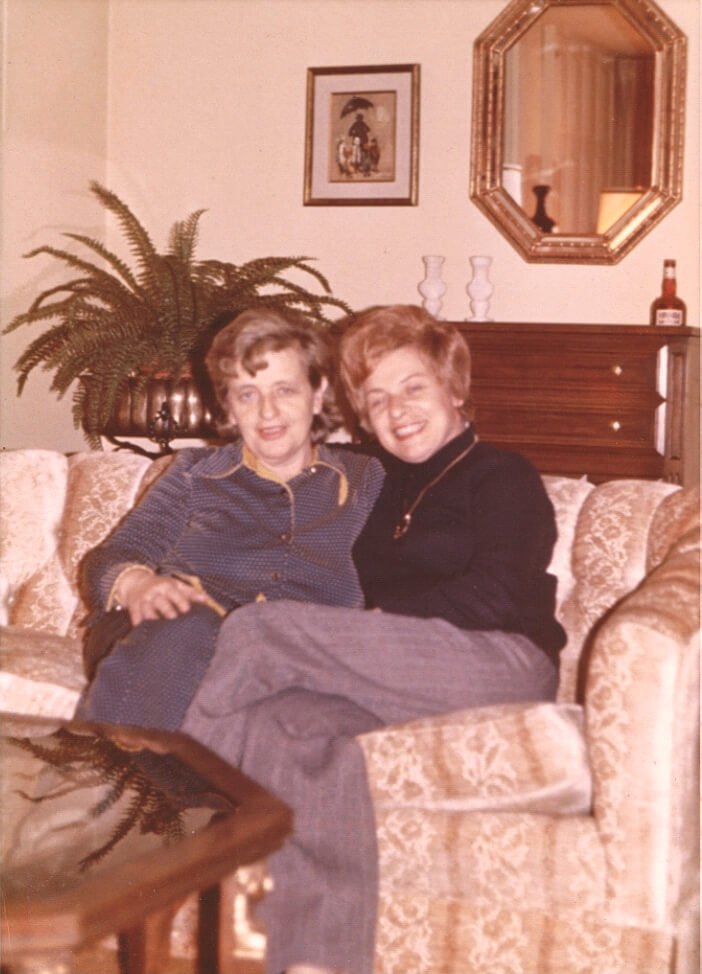
When the girls were sent into Soviet exile at the ages of 10 and 7, the family’s desperate plan was to outrun the Nazis to safety in the east - perhaps make it to Afghanistan or even Palestine. Later, Yossel was conscripted into the Soviet army and lost completely to the family. The remaining 4 made it as far as Kokand, Uzbekistan, where Hershel and Leah succumbed to hunger. In the remaining two years of the war, Rosa safeguarded her little sister as best she could in multiple states of the former Soviet Union. After the war, they spent time in several DP camps before coming to America aboard the “Orphan Boat” SS Ernie Pyle. Settling in Los Angeles, Roisa (Rosa now) and Gittel (Genie now) each married and had 4 and 3 children, respectively, in close succession. The Red Cross found their brother, Yossel, in 1979, in the town of Stryj, Ukraine, but he died approximately 3 months after they made contact, though they were joyfully able to speak with him on the phone and arrange for his possible immigration. Throughout Rosa’s life, Genie affectionately called her, Mamenko - mommy, in Polish.
Whether she blinked enough to keep her eyes open or gave up and allowed them to stay shut, it didn’t matter much. It was all darkness anyway. Black was the snow, and black was the Siberian night, and black was the iron of the tracks. As her breath rose, she felt it in a fine mist and then it was gone. She huddled for warmth, but also to stay in one place, for the hill that she was on – that bore the train tracks – was uncomfortable. It would not be long now until she could hear the train coming and it would be time for her work. She would only have to sit tight for just a little more.
What a job for a 15-year-old. Who, in her right mind, would possibly take this work if she had any choice in it? She liked it better when she used to work in her daddy’s laundry back home. She loved him and missed him so much. After all, she was the only one that he taught to play pinochle so that she could be a part of the game when his friends came. That was when she felt closest to him. Gittel was too young to be any part of that.
This work paid - if that is the right word - no more than a hut to sleep in and a bowl of soup to eat. But when the night came, she knew that it was right to do it. She was lucky to have food in these times, and to have a place to live, and the chance to have her little sister Gittel in that Russian orphanage where they were fooled into thinking she was a Russian. And all this waiting just to be ready to switch the tracks at the right time. If she was late the cars full of Soviet troops would not make it the front as they were meant to. There would be hell to pay. They had to fight Hitler after all. She had one thing to do and she was proud that she had learned it well. She sat on the tracks because that way, not only would she hear the train coming, but she could sense the vibrations too. This worked for her so many nights and she was good at it.
She remembered the time in the beginning, when she did not have work, and she remembered what it meant to be hungry. She thought of the time when she and her parents and Gittel slept in an abandoned Synagogue, and how hard the wooden benches were for beds. She remembered hearing the rats as they ran in the night and nipped at her toes and how they felt both disgusted and fortunate to sometimes catch and eat one. She remembers her father, during the light of day, running after a stray dog for that same hunger. Much later she would say that much as she loved America as the country that had given her a home, Americans did not know how to be hungry. Americans did not know the infinite value of a sack of potatoes that could be bought for a few dollars. Oh, she could teach them, but it was not her task to teach them all about the things she had learned. She saved those for us.
She remembered the times at home, near the River San that wound through her town, and how she used to go there to swim or just eat lunch from her rucksack on the grass banks of the river. She remembered their laundry in the square and how proud she was when her father taught her to use the machines - The special pressing machines that her father had brought back from Belgium after he fought in the first World War. Their specialty was pressing those collars that men used to change from shirt to shirt. She thought of how those times seemed so far away and that no matter how hard she imagined them, she could not see them anymore as she once did. She trembled when she remembered the day that the Nazis came and decided that all the town’s Jews had to swim across the river into Russia with machine guns shooting over their heads. It would have been better if she knew how to swim but thank God that her parents were able to pull her and Gittel’s arms strongly from either side and get them across. She remembered how the Nazis ripped the hems of their dresses to find the long gold necklaces that they had carefully sewn in as they made their way down to the river.
She could not make her parents come back either. They were gone now and she knew it well, for she had put them in the ground herself. In that far land of Uzbekistan, where the trains had taken them, they all watched dumb as the locals sat around low brass tables and ate their plov. But here was no rice or mutton for them to eat, only whatever scraps they could find in the street or the trash. In that sweltering land her parents starved, and in that earth, she dug their graves by the side of the road. She couldn’t save them. Maybe she was fourteen then. Now she was older and knew more. She knew how to switch the train. She knew how to help her little sister, how to be both big sister and mother to her. She knew how to teach her to be silent so that the Russians did not hear how she made her “R’s” – and give away that they were Jews. Maybe if her parents had only survived until now, she would have been able to save them too.
But as she remembered all these things that would neither go away nor come back, her eyes stayed shut and she fell into a deep sleep. When awake she would curse herself for failing at the one task that she was supposed to do right that night. She could not be lazy or have the luxury of falling asleep this way if she wanted to save herself and Gittel also. She knew the war would soon be over and then she would ride the same trains back to her home in Poland. She had come to feel that those trains were what she knew best, and that she could use them when she needed. She knew how to sneak on one without being seen, what kind of empty car to hide in, and how to jump off before the station.
And as she slept, she dreamt of her mother. She saw the image of her mother, shrouded in swirling white linens that blew in the wind and snow, hovering over her. She called out, “Momma!”
Again, she shouted, “Momma, Momma, come to me, I need you!” And as she finished, the eyes of her mother met hers longingly and stayed with her for a moment. Then those eyes became wide and full of fear, and her face turned alive. Before she could call again, the spirit of her mother had turned and ran away into the night without looking back. She knew that her only chance to be with her momma again was to go join her, to run after her into that other world. As she dreamt, she mustered every ounce of strength she had to move, to make her muscles overcome their bonds.
As she startled awake, she found herself tumbling down the hill, rolling down like a log. She could see the flashing lights of the train and the heads of thousands of troops that were inside. And she could feel the momentum of that train and how it had missed her by inches. She knew, and would remember for the rest of her life, that her mother had come back to save her. Such was the power of love to my mother.
Copyright © 2026 Paul Schneider. All Rights Reserved.